Combining Islamic Financeand Sustainability -sacred principles, new paradigm
What is Tayyib Inspired? »
Who is certification for? »
Application process »
Certification showcase »
The Tayyib movement »
Building New Ecosystems For Islamic Sustainable Finance
Bringing People and Planet Alongside Profit
The world faces a global climate and nature crisis and increasing calls for stakeholder capitalism whereby the financial system works for people and planet alongside profit. Sustainable investing and Islamic finance have many shared principles such as stewardship of the environment, protecting worker rights and having positive social contribution.
Regulatory initiatives such as the UAE Central Bank HSA Guiding Principles Regarding Islamic Sustainable Finance (ISF), Securities Commission Malaysia (SC) principles-based Maqasid Al-Shariah Guidance for Islamic Capital Market Malaysia and it’s SRI Sukuk framework along with Bank Negara Malaysia (BNM) Value-based Intermediation (VBI) Financing and Investment Impact Assessment Framework are leading examples in the move towards sustainability.
In addition, market led initiative such as UKIFC- Tayyib Inspired platform, Greenpeace MENA Tayyib Fellowship, CIBAFI’s sustainability guide and programmes from MIFC have further contributed significantly.
Regardless of the terminology (ISF, Maqasid, Tayyib, VBI), at their heart collectively these initiatives seek to reflect Shariah compliance coupled with enhanced focus on active sustainable (also referred to as ESG/Responsible) integration framed by Islamic values.
The Business Logic
1
Empowering growth
Mainstream responsible investing is rapidly growing and has surpassed $30 trillion (2025) accounting for recent anti-ESG sentiment. This presents a compelling business opportunity for Islamic asset managers to access diverse agnostic global sustainability linked liquidity pools, enabling them to attract new mandates. Furthermore, many of these liquidity pools target deployment in the global south, a natural realm for numerous Islamic asset managers.
2
Encouraging innovation and expanding choice for existing Islamic finance consumers
Using Islamic sustainable finance principles to develop new innovative sustainability linked products expands the current product offering. This can include solutions for customers wishing to have their Islamic pensions aligned with net zero goals.
3
Global collaboration and enhanced participation
Combining approaches benefits both conventional and Islamic markets.
Islamic principles can present additional perspectives and solutions to challenges and tension points emerging within the global conventional sustainable market. With over 1.6bn Muslims globally ensuring all voices are included in addressing the “S” in ESG enables a more considered and relevant solutions.
Contemporary Islamic Finance has principally grown from an exclusionary basis. The sector can benefit from the considerable global developments in sustainability classification, reporting (e.g GRI) and accounting frameworks and approaches to issues such as nature and biodiversity (e.g. TNFD).
The Islamic finance sector is valued at over $5 trillion (2025) and spans prominent financial hubs across the globe, including London, Luxembourg, Dublin, Istanbul, Dubai, Bahrain, and Kuala Lumpur. The early pioneers of Islamic finance skilfully created Shariah-compliant "halal" options, driving financial inclusion and GDP growth. Projected to reach $10trn by 2030, Islamic Finance presents the next frontier for growth and directing just 5% of the industry towards sustainability presents a $500bn opportunity!
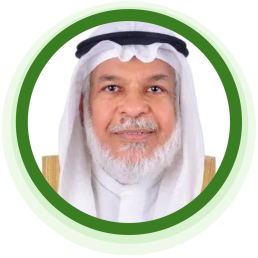
Dr. Mohamed Ali Elgari
Professor of Islamic Economics
“I have no doubts that Islamic principles can have a positive impact in the global transition to a more sustainable and equitable economy. I urge the Islamic finance industry to embrace the opportunities that lie ahead and to work collaboratively in the ESG finance space to create a more sustainable future for all.”
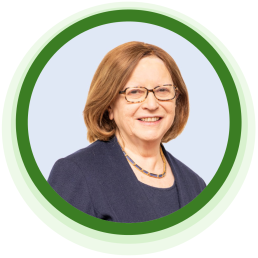
Dame Susan Rice
Chair, GEFI Global Steering Group
“With global growth in sustainable finance, it is an opportune moment for the Tayyib concept and the beautiful principles it encapsulates to come to the fore in Islamic finance.”
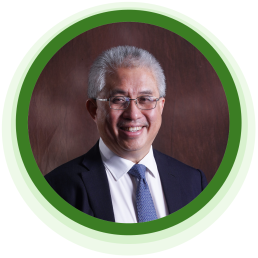
Tan Sri Azman Mokhtar
Chairman, INCEIF University
“It is a fundamental axiom in finance that the role of finance is to first of all support the proper functioning of the real economy and businesses that in turn is among the key building blocks to help build a more inclusive, sustainable, progressive, and ultimately just society.”
Global Regulatory Standards
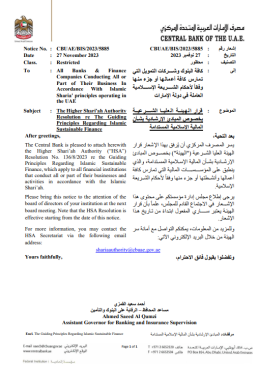
UAE Central Bank - Guiding Principles for ISF (2023)
At COP28, the Central Bank of the United Arab Emirates (CBUAE), the Higher Shari’ah Authority, has issued guiding principles on sustainable Islamic finance. These guidelines aim to incentivise and encourage Islamic financial institutions to bolster sustainability within their practices and processes, aligning with a vision that considers both environmental and social dimensions.
The issuance of the guiding principles coincides with the UAE’s hosting of the Conference of the Parties (COP28), which highlights sustainable practices and foster united efforts in addressing sustainability-related challenges.
The guiding principles comprise ten directives for Islamic financial institutions, aimed at instituting and effectively implementing sustainability. These directives involve clear strategies and plans to facilitate this objective.
Additionally, the guiding principles delineate Shari’ah-based foundations to enhance decision-making approaches, particularly concerning sustainability. They also emphasise the development of financial products that will positively impact, and engage with, environmental and social factors.
Securities Commission Malaysia - Sustainable and Responsible Investment Sukuk Framework (2014 & 2022)
The Securities Commission Malaysia (SC) introduced the Sustainable and Responsible Investment (SRI) Sukuk framework (the Framework) in 2014 to facilitate the creation of an ecosystem that promotes sustainable and responsible investing for SRI investors and issuers.
The Framework is in accordance with international standards and best practices which emphasise the importance of transparency in respect of disclosure requirements.
This document serves as a reference to the relevant stakeholders, which must be read together with other requirements in the Guidelines on Unlisted Capital Market Products under the Lodge and Launch Framework and Guidelines on Issuance of Corporate Bonds and Sukuk to Retail Investors, whichever applicable.
Securities Commission Malaysia - Maqasid Principles for Islamic Capital Markets (2023)
In 2023, the Securities Commission Malaysia (SC) introduced the principles-based Maqasid Al-Shariah Guidance Islamic Capital Market Malaysia, a fundamental developmental effort to further promote a strong and resilient industry.
The Guidance provides universal guiding principles to enhance Islamic capital market’s (ICM) competitive advantage and fortify ICM’s impact and contribution to society and the real economy.
By adhering to the highest ethical standards based on core Shariah principles, the initiative is expected to sustain the trust and confidence of its stakeholders.
This is also in line with the SC’s Capital Market Masterplan 3 (CMP3), which seeks to recognise Malaysia as a global leader in ICM and enhance Malaysia’s position as a regional centre for Shariah-compliant Sustainable and Responsible Investment (SRI).
The Guidance is designed to be applicable to industry players and products and services. In the course of its development, robust efforts had been made including, but not limited to, engagement with various industry players and scholars and benchmarking against various relevant international best practices in assessing the extent of its applicability.
Bank Negara Malaysia - Value-based Intermediation Financing and Investment Impact Assessment Framework (2019)
The Value-based Intermediation Financing and Investment Impact Assessment Framework (VBIAF) was prepared by Bank Negara Malaysia in collaboration with the VBI Community of Practitioners (CoP), the International Centre for Education in Islamic Finance (INCEIF) and The World Bank Group (Malaysia Office). The World Wide Fund for Nature (WWF) (Malaysia and Singapore Offices) also made significant contribution towards the drafting of this document, especially from the environment and social aspects.
The VBI commitment is premised on the underpinning thrusts described in the Strategy Paper and elaborated in the Implementation Guide for VBI. Although it is not a new concept, the key difference between VBI and initiatives such as Environmental, Social and Governance (ESG), Ethical Finance and Sustainable, Responsible Impact Financing (SRI) is the reliance on Shariah in the determination of its values, moral compass and priorities.
The implementation of VBI will necessitate a comprehensive review of the existing business environment, essentially going beyond the current Shariah compliance culture and innovating new policies and systems that can further deliver the value proposition of Shariah.
The implementation of VBI begins with the formation of the Corporate Value Intent (CVI), which articulates the Islamic financial institution’s (IFI’s) VBI commitment and forms the basis for the formulation of all policies and systems from the front office to the back office, including customer service, marketing, product development, risk management, treasury, compliance, finance, human resource and information technology.
Global Industry Initiatives
GEFI, UKIFC & Greenpeace MENA - Islamic Sustainable Finance Initiative (2025-26)
The Islamic Sustainable Finance Initiative (ISFI) is a pioneering partnership designed to support the development of the ISF ecosystem against the backdrop of COP28 and the associated transformative regional pledges like the UAE Banks Federation’s AED 1 trillion commitment to sustainable finance by 2030 and DIFC’s goal to train 1 million sustainability leaders.
Programme Overview
ISFI seeks to build the ecosystem for ISF through a structured systematic programme that focus on practical market issues. The programme builds on the previous work by GEFI and UKIFC in this thematic (HLWG for Green and Sustainable Sukuk, Project Tayyib Inspired, Global IF and UN SDGs Taskforce, etc.). Core elements of the programme include:
- Capacity building – ISFI Masterclass offering a three-day, in-person, practitioner-led programme for Islamic finance professionals, complemented by the Tayyib Fellowship, in partnership with Greenpeace MENA and Ummah for Earth, a virtual nine-month global leadership initiative bridging Islamic finance and climate action.
- Round tables – Focused round table sessions developing a harmonised understanding of key sustainability topics.
- Thought leadership – Insight papers and reports pushing intellectual boundaries, tackling controversial topics and addressing research gaps.
- Retail surveys – To understand customers expectations towards ISF

MIFC Leadership Council - Tayyib: Discussion Paper, Scholars review / Establishing Islah through Islamic finance (2024)
This study, commissioned by the MIFC Leadership Council (MLC), aims to explore the potentially powerful concept of Tayyib, with a focus on operationalising and applying it to business and Islamic finance practices. It delves deeply into the guidance, wisdom, and historical practices from our rich history of developing economic and financial practices for the benefit of all. Tayyib, linguistically, means to be of a pure and wholesome constitution, to be better than being merely permissible. In the context of Islamic finance and business practices, Tayyib essentially implies that practices should not only be Shariah-compliant (halal), but also strive to surpass this level of compliance, adhere to a higher standard, be Shariah-based, and be closer to achieving the higher objectives of the Maqasid Al-Shariah.
UKIFC & GEFI - Project Tayyib: Islamic Sustainable Investing Platform (2024)
The Islamic Sustainable Investing Platform (the Platform) is inspired and framed by the Islamic concept of “Tayyib” (pure, wholesome, and impactful). It complements the existing “halal” paradigm successfully built by the early Islamic finance pioneers and supports the development of the Islamic asset management sector. At its heart it seeks to reflect Shariah compliance coupled with enhanced focus on active sustainable (also referred to as ESG/Responsible) investing framed by Islamic values.
The “Tayyib inspired” approach seeks to build on this success, with the introduction of enhanced sustainability considerations through producing practical market tools for asset managers.
Project Tayyib is a market driven initiative, building on several years of market assessment and formally commissioned in 2022 by the UK Islamic Finance Council (UKIFC) together with the Global Ethical Finance Initiative (GEFI). Market analysis undertaken has validated the demand and brought together partners reflecting a genuine global collaboration with stakeholders from the UK, Malaysia and the GCC.

CIBAFI - Sustainability Guide for Islamic Financial Institutions (IFIs) - Guidelines for Islamic Banks (2022)
Developed to promote sustainable development in the Islamic banking industry by supporting Islamic banks in integrating sustainability in their business activities while considering environmental, social, and economic objectives.
Definition of Islamic Sustainable Development – “Islamic paradigm is that the universe and the Earth were created with a very fine balance (mizan) and that human beings are expected to maintain or sustain that balance. Islamic financial institutions have their own part to play in fulfilling this Islamic paradigm to restore mizan”.
5 principles and implementation guidance
- Sustainability Integration – top down approach bank strategy, resource, SOPs, capacity, business activities
- Sustainability Governance – Sustainable committee sit alongside audit/credit/risk committee. SC reports to SSB
- Enviro & Social Sustainability Risk Management – identify, categorise, analysis, mitigation, monitor
- Monitor, Reporting and Communication – report in reference to specific groups stakeholders, regularly monitor, develop impact assess criteria for its financing activities, develop scorecards (qual. & quant.) to measure E&S, communicate to all relevant stakeholders
- Coordinate and Collaboration – commit to relevant international standards and best practice, support CIBASFI in sustainability initiatives, collaborate with IFIs, contribute to dialogue.
UKIFC - Global Islamic Finance and UN SDGs Taskforce (2020)
The Global Islamic Finance SDG Taskforce was a unique collaboration between the public and private sectors spearheaded by the UKIFC and HM Treasury, which explored the role the Islamic finance industry can play in addressing this funding gap and to better understand the commercial opportunities the SDGs present for the sector.
Assets were expected to reach US $3.8 trillion in 2022, Islamic finance is one of the fastest growing sectors in the global financial industry. Achieving the 17 Sustainable Development Goals (SDGs) agreed in the UN’s 2030 Agenda for Sustainable Development will take over US$5 trillion per year investment with the current financing gap standing at around $2.5 trillion per year.
The UN’s SDGs are the blueprint to achieving a better and more sustainable future for all, addressing issues such as climate change, education and equality. Achieving the SDGs requires a coordinated global effort with governments and private sector, including the financial services sector as a whole. Analysis indicates there is limited engagement by the global Islamic finance sector and therefore the focused taskforce was established by the UKIFC.
Videos
Chair Steering Committee, Project Tayyib
Tan Sri Azman Mokhtar
“The development of the GEFI Tayyib Seal is a groundbreaking first step, this collaborative effort paves the way for a dynamic and transformative intersection of Islamic finance and ESG considerations.”

Steering Committee members
Azman Mokhtar Steering Committee Chair
Cliff Prior
David Sheasby
Kate Walsh
Muneer Khan

Noman Tahir
N. Tariq Shaikh
Omar Shaikh
Salman Siddiqui
About Us
The Islamic Finance Council UK (UKIFC)
The UKIFC was established in 2005 as a specialist advisory and developmental body focused on promoting and enhancing the global Islamic and ethical finance industry. The UKIFC has remained committed to its guiding principle of making a tangible, positive impact to the sector. The team has advised governments, authored technical reports, presented at international conferences and developed training programmes which, collectively, have changed global regulation and played a leading role in exploring the relationship between Islamic finance and the broader ethical finance arena.

Global Ethical Finance Initiative
The Global Ethical Finance Initiative (GEFI) oversees, organises and coordinates a series of programmes to promote finance for positive change. It brings together the world’s business, political, and social leaders to build a fairer finance system for people and the planet.