

Announcement – UK thought body is the first specialist Islamic Finance organization in the world to endorse the new UNEP-led guidelines for responsible banking.
Today Islamic Finance Council UK (UKIFC) became the first advisory body dedicated to Islamic finance to endorse the United Nations Environment Finance Initiative’s (UNEP FI) Principles for Responsible Banking (UN PRBs), joining 64 other international banks and stakeholders.
The UN PRBs represent an opportunity for the Islamic Banking industry, which is made up of over 1,300 financial institutions and windows, and is growing at 6% annually. It is a USD2.4 trillion contributor to the international banking marketplace forecasted to reach USD3.8 trillion by 2023 (Islamic Finance Development Report 2018).
The Principles are the first global framework to enable banks to integrate sustainability across their operations and enhance their positive impact with in the regions they operate in. Arab African International Bank (AAIB) (Egypt), Commercial International Bank (CIB) (Egypt), CIMB Bank (Malaysia) and Garanti Bank (Turkey), which operate in muslim-majority countries, are amongst the founding signatories.
The PRBs strongly align with the principles of Islamic Finance. Alignment and Impact are embedded in the foundational goals of the Maqasid al Shariah, a framework of purpose in Islamic practice that focuses on the objective of wealth and the preservation and continuity of life. Achieving communal prosperity and financial transparency underpin Shariah compliant finance, based on a law designed to protect all members of a society. Fairness and inclusion are themes of Islamic finance that resonate with the remaining four UN PRBs (Clients, Stakeholders, Governance and Transparency). Adopting the UN PRBs will encourage more innovation in the use of Islamic finance instruments to achieving the SDGs, such as green Sukuks.
Omar Shaikh, Member of the UKIFC’s Advisory Board said: “The UKIFC is the leading organization in Islamic finance actively promoting greater integration with the broader ethical finance marketplace. The underlying principles of Islamic finance align well with people, planet and purpose. The enhanced nature of stakeholder involvement in Islamic finance sits particularly well with the ethos of UNEP FI’s Principles for Responsible Banking 6 principles and for this reason we welcome and endorse them.”
Simone Dettling, head of the Banking team at UNEP FI said: “It is fantastic to see this coalition growing so quickly. The Principles for Responsible Banking are rapidly setting the global standard for what it means to be a responsible bank. We invite banks that haven’t endorsed them yet to join and show their commitment to the sustainable banking system of the future.”
The Principles, developed by 28 of the world’s leading banks, are currently out for global public consultation until May 2019 and will become available for signature in September 2019, during the UN General Assembly. Shariah compliant banks and intermediaries are encouraged to join the coalition by endorsing the Principles.
The UKIFC contributes to research and advisory on the alignment of the UN SDGs with the Maqasid al Shariah in the Islamic Banking industry, shaping the industry’s role in the broader ethical finance industry and promoting shared values across faith-based finance and investment institutions (The Edinburgh Finance Declaration).
ENDS
For media enquiries, please contact: Chris Tait at chris@ukifc.com
Notes to editors
Islamic Finance Council UK
The UKIFC is a specialist advisory and development body focused on promoting and enhancing the global Islamic and ethical finance industry. The organisation was launched in 2005 by a group of likeminded professionals who sought to make a contribution to the development of the Islamic finance industry. The UKIFC specialises in four core areas, being: 1) Ethical finance – helping to promote better co-ordination and understanding of the shared values between Islamic finance and the broader ethical finance arena; 2) Advisory – specialist capability in advising government agencies, regulatory bodies and financial institutions on creating enabling frameworks for Islamic finance; 3) Executive training – delivering bespoke capacity building programmes aimed at practitioners and regulators focused on commercial issues; and 4) Thought leadership – authoring reports, community education and providing industry comment towards influencing regulation and encouraging the development of the sector based on strong research and insights.
Principles for Responsible Banking
The six Principles for Responsible Banking that banks commit to are:
1) Alignment: We will align our business strategy to be consistent with and contribute to individuals’ needs and society’s goals, as expressed in the Sustainable Development Goals, the Paris Climate Agreement and relevant national and regional frameworks. We will focus our efforts where we have the most significant impact.
2) Impact: We will continuously increase our positive impacts while reducing the negative impacts on, and managing the risks to, people and environment resulting from our activities, products and services.
3) Clients & Customers: We will work responsibly with our clients and our customers to encourage sustainable practices and enable economic activities that create shared prosperity for current and future generations.
4) Stakeholders: We will proactively and responsibly consult, engage and partner with relevant stakeholders to achieve society’s goals.
5) Governance & Target-setting: We will implement our commitment to these Principles through effective governance and a culture of responsible banking, demonstrating ambition and accountability by setting public targets relating to our most significant impacts.
6). Transparency & Accountability: We will periodically review our individual and collective implementation of these Principles and be transparent about and accountable for our positive and negative impacts and our contribution to society’s goals.
For more information about the Principles visit www.unepfi.org/banking/bankingprinciples
- The Principles were launched by the Founding Banks’ CEOs on 26 November 2018 in Paris at the UN Environment Finance Initiative’s biennial Global Roundtable and the 4th Climate Finance Day, under the patronage of the French President Emmanuel Macron.
- The Principles are now in a six-month global public consultation period until 31 May 2019 before they will be signed by banks from around the world. Banks and stakeholders are invited to provide feedback and input to guide their further development, and to signal their support by becoming Endorsers of the Principles for Responsible Banking.


Ethical Finance Round Table Explores the Role of Blended Finance for the SDGs
The 17th Edinburgh Ethical Finance Round Table took place at the Scottish Parliament on Wednesday 24th October 2018 during a week of ethical finance events that were anchored by the 2-day Ethical Finance 2018 conference held at the RBS Conference Centre.
 The round table began with Scottish Government host Ivan McKee the Minister for Trade, Investment and Innovation, welcoming those attending and expressing the Scottish Government's support for the round table series and the Global Ethical Finance Initiative in general.
The topic for the meeting was the implementation of the United Nations Sustainable Development Goals (SDGs) and the role of "Blended Finance" in achieving this. The first speaker was Gail Hurley, a Senior Advisor on Development Finance with the United Nations Development Programme (UNDP), which provides analysis of development needs and funding gaps as well as supplying support to individual countries.
 While it is commonly stated that in order to implement the SDGs by the target date of 2030 an annual spend of $2.5 trillion will be required this may in fact be understated. In any event it is clear that development aid and domestic facilities alone will be far from sufficient to achieve this, so private capital will be essential and hence the development of the concept of "Blended Finance", i.e. mobilising development and philanthropic capital alongside private investment resources.
Currently the principal areas where this is being taken up are among the "middle income" economies, notably in sub-Saharan Africa, the Caribbean and the Middle East, with the principal focus of investment being in infrastructure, renewable energy and agriculture. While Blended Finance is expected to continue to expand it does face significant problems – limited capacity in individual governments, limited take-up within poor countries, the complexity of the financial structures involved and the affordability of alternative and more straightforward sources of funding (notably from China).
Gail concluded her presentation with an example of a recent successful project – the world's first Tobacco Control Bond, helping farmers in Sri Lanka and Zambia to transition to other crops.
 The second presentation was given by Maria Teresa Zappia, the Chief Investment Officer of BlueOrchard, a leading global impact investment manager based in Geneva, which had itself been established as a result of a UN initiative. She explained that while BlueOrchard had initially specialised in microfinance projects this had expanded more recently into Blended Finance vehicles. Nine funds in all had been established in this area with five in current operation. In all it was estimated that up to 2017 $100 billion of Blended Finance had been mobilised. In their experience Blended Finance investment vehicles require to be carefully structured with the "waterfall" of preferences reflecting the needs of different investors and with the public investment always taking the "first risk" slice. In practice however, structuring the vehicles to meet the exact needs of varying investors presented many challenges.
 A wide-ranging discussion then followed, the first question arising being the extent to which capital can be leveraged by these techniques. Gail Hurley indicated that, in broad terms, public funding currently generates a private capital multiple of around 2.5. In response to a further question, Maria Teresa Zappia advised that while their Blended Finance vehicles were effectively regulated via BlueOrchard's registration in Switzerland and Luxembourg they were not listed or rated. The difficulty of incorporating assets from the poorest countries in "frontier markets" with very little financial infrastructure were also discussed.
 The meeting concluded with a brief outline from Jamison Ervin, also of the UNDP, of the new two year partnership programme between the UNDP, the Ethical Finance Hub, FaithInvest and Heriot-Watt University seeking to develop a pipeline of investable nature-based projects in developing economies, and in particular seeking to find ways of bridging the financial gap between the size of the individual projects involved and the requirements of the professional investment market. She was heartened by the announcement earlier in the week of the Scottish Government's funding and support for the project.
FOR MORE INFORMATION ON THE ETHICAL FINANCE ROUND TABLE SERIES PLEASE CLICK HERE

Event Listings for Edinburgh Ethical Finance Week - 22nd - 25th October 2018
As part of the Global Ethical Finance Initiative international leaders in ethical finance will be convening in Edinburgh at Ethical Finance 2018 taking place on 22nd - 23rd October 2018. The conference will be delivered in partnership with United Nations Development Programme (UNDP), Scottish Government and RBS.
Ethical Finance 2018 will explore themes including regaining trust in financial institutions, measuring impact, aligning capital to the UN Sustainable Development Goals (SDGs) and the $7trn demand for ethical investment products from faith and philanthropy groups.
The conference forms part of a wider ethical finance week that includes a series of events, organised and supported by Baillie Gifford, Church of Scotland, The Institute of Chartered Accountants of Scotland (ICAS), Ethical Finance Hub and the Financial Innovation Lab, that will take place in Edinburgh between the 22nd - 25th October 2018.
Please see below for details:
______________________________________________________________________
ETHICAL FINANCE 2018* - 9am - 5pm, 22nd - 23rd October 2018
Hosted by RBS at the Gogarburn Conference Centre, Edinburgh and delivered by UKIFC in partnership with Scottish Government, UNDP and Responsible Investor
*includes an evening reception at Edinburgh Castle (6.30pm - 8.30pm, 22nd October 2018)
_______________________________________________________________________
INTERFAITH COLLABORATION ON ETHICAL FINANCE CELEBRATORY DINNER - 7pm - 9.30pm, 23rd October 2018
Hosted by Church of Scotland at Greyfriars Kirk, Edinburgh in partnership with UKIFC.
www.globalethicalfinance.org/edinburgh-declaration/
_______________________________________________________________________
UNDP ROUND TABLE: ROLE OF BLENDED FINANCE FOR THE SDGs - 1.45pm - 4pm, 24th October 2018
Hosted by Ben Macpherson MSP at the Scottish Parliament, Edinburgh and delivered by UKIFC in partnership with UNDP and Baillie Gifford.
Ethical Finance Round Table Overview
_______________________________________________________________________
INCLUSIVE FINANCIAL INNOVATION IDEATION EVENT - 10.30am - 4pm, 25th October 2018
Hosted by the Finance Innovation Lab at Foundation Scotland, Edinburgh.
_______________________________________________________________________
SUSTAINABLE FINANCE DISCUSSION - 6pm - 8pm, 25th October 2018
Hosted by ICAS at CA House, Edinburgh in partnership with Ethical Finance Hub.
_______________________________________________________________________
Over the past 8 years, along with our partners, the UKIFC has pioneered and developed a number of ethical finance initiatives in Edinburgh. Moving forward, these activities are being consolidated under one neutral umbrella - Global Ethical Finance Initiative (GEFI) - which aims to create a compelling proposition that positions Scotland as the "Davos" of ethical finance.
We believe Scotland is well positioned to become a global leader in ethical finance by facilitating dialogue and enabling innovative businesses, initiatives and thinking. To do so we welcome your participation and support so please come along to the Ethical Finance Week events and feel free to share with colleagues and associates.
If you wish to discuss the new Global Ethical Finance Initiative or any of the events in more detail please contact chris@ukifc.com or call Chris Tait on +44(0) 7931 103573.

UKIFC and Church of Scotland to Celebrate the Launch of the Edinburgh Declaration
 Faith and finance leaders from across the globe will come together at Greyfriars Kirk in Edinburgh on 23rd October 2018 to celebrate the launch of the "Edinburgh Declaration", to be officially unveil the Declaration at the Ethical Finance 2018 Castle reception on 22nd October.
Driven by a mutual desire to move towards a fairer, more responsible finance system the initiative aims to bring together the best of our respective faiths to build a shared values framework (Edinburgh Declaration) which can be used to underpin the development of a commercially viable ethical finance solution open to all in society.
In order to identify and articulate the shared values a series of workshops were held bringing together theologians, leading industry practitioners and well-informed faith-thinkers, to explore and debate faith reflections on ethical finance and economics.

The first workshop, held in Edinburgh in May 2016, reflected upon the historical perception and trajectory of an ethical economy in the two faiths. The session explored the theological perspectives and philosophical underpinnings of Christianity and Islam.
The second workshop, hosted by Lord Sheikh in the House of Lords in October 2016, explored the shared values in ethical finance amongst the faith traditions within the context of the present commercial world. As well as perspectives from theologians and religious leaders we also had contributions from leading asset managers, banks and economists who provided insights on different types of economic models where ethical finance can deepen the economy, encourage inclusion and create positive social impact.
A draft Declaration was developed as a direct output of the first two workshops and supplementary conversations with the third workshop providing an opportunity to present, and critically appraise it.
As a final step the draft Declaration was shared with a number of other faith groups with all feedback collated and integrated into the final document.
The Declaration will provide the guiding principles that underpin the formulation of a financial product or service open to all in society regardless of religion or ethnic background. As we prepare to embark upon a research and development phase we ask any individuals and organisations interested in supporting this to please get in touch.
The celebratory dinner will provide an informal opportunity for contributors to reflect upon the journey so far and consider what the future might hold.
For further information please contact omar@ukifc.com

UKIFC launches Ethical Finance 2018 Conference
UKIFC is pleased to announce that we are working in partnership with Responsible Investor, RBS Scottish Government and United Nations Development Programme on Ethical Finance 2018 which will take place in Edinburgh on October 22-23rd 2018.
The conference will bring together an expected 300 delegates from the ethical, faith and mission based investment community as part of the Global Ethical Finance Initiative.
The event will explore how trust in a sustainable economy can be revitalised, and how banks, fund managers, faith and endowment investors are confronting today’s biggest societal and economic challenges, notably as part of the United Nations SDGs.
To find out more and to register please CLICK HERE.

JOB VACANCY - Senior Consultant and Researcher
We are currently recruiting a Senior Consultant and Researcher for a 12 month full time (or 4 days per week pro rata) contract based in Glasgow or London.
The successful candidate will be responsible for leading and undertaking consulting assignments, high-quality research and report writing activities for the organisation as well as supporting other colleagues.
The role will involve effective self-management and delivery of a range of developmental projects and client assignments across our four core work streams. The role will also include operational responsibility such as the management of budgets and resources.
UKIFC Senior Consultant and Researcher Job Specification
Please send your CV and a 300 word summary outlining why you are suitable for the role to umer@ukifc.com by 31st July 2018.

UKIFC Senior Advisor Talks to CNBC Africa about Financial Inclusion
According to the World Bank around 2 billion people do not use formal financial services and more than 50% of adults in the world’s poorest households are unbanked. A number of factors significantly affect financial inclusion and through working with policymakers, regulators and development agencies across the globe over several years we at the UKIFC are acutely aware of these.
Financial inclusion typically relates to transactions, payments, savings, credit and insurance products and services that facilitate day-to-day living, helping families and businesses plan for everything from long-term goals to unexpected emergencies. As account holders, people are more likely to use other financial services, such as credit and insurance, to start and expand businesses, invest in education or health, manage risk, and weather financial shocks, which can improve the overall quality of their lives.
UKIFC Senior Advisor, and financial inclusion expert, Modupe Ladipo joined CNBC Africa to discuss financial inclusion in Africa.
Please click on the link to watch the full interview - Keeping track of Nigeria’s financial inclusion strides

UKIFC Deliver an Islamic Finance Course in Edinburgh
The positive convergence of ethical and Islamic finance, coupled with the demand from a wide range of industry stakeholders keen to develop their knowledge and understanding in these overlapping areas, has led the Ethical Finance Hub to launch a unique and flexible executive education summer course offering in Edinburgh, Scotland.
Despite the remarkable recent growth of ethical and Islamic finance there remain few academic or professional courses that provide practically-focused pragmatic training.
The 3 day "Islamic Finance - An Ethical Alternative", an intensive practical Course designed, developed and delivered by the UKIFC, will begin with a comprehensive introduction to Islamic finance, its ethical foundations, core structures, and creation of Islamic banking products. It will then offer practical guidance in creating enabling regulatory frameworks, particularly within a secular context, before exploring the nuances of Shariah compliant asset management. The Course concludes with a session focused on the legal, mechanics and trends within Islamic finance real estate transactions.
The course will take place at Edinburgh Business School, Heriot-Watt University Monday 25th June 2018 - Wednesday 27th June 2018. with the 2 day "Ethical Finance and Investment Paradigm" takes place over the following two days.
For further information and to register please click HERE.

UKIFC Partnership with Alliance of Religions and Conservation (ARC) Discussed on the BBC
Omar Shaikh (UKIFC) and Martin Palmer (Alliance of Religions and Conservation (ARC)) appeared on BBC Radio Scotland's Sunday Morning with Ricky Ross to discuss a new and innovative partnership between the organisations which aims to promote a major shift in international ethical finance. ARC, UK-based international NGO linking religions with environment initiatives, was founded in 1996 by HRH The Prince Philip and current Secretary General Martin Palmer.
The agreement came after a delegation from ARC spent two days in Edinburgh, attending the UKIFC’s 15th Ethical Finance Round Table as well as meeting with representations of the Ethical Finance Hub, Scottish Government, Church of Scotland and others to discuss the possibility of a new faith-consistent investment unit being based out of the Hub in Edinburgh.
ARC has been working with the United Nations Development Programme (UNDP), Organisation for Economic Cooperation and Development (OECD) and faith groups from across the globe to explore the development an international faith-consistent investment alliance which seeks to address the challenges and opportunities posed by the SDGs. The UN recognises that traditional aid channels and funds are not sufficient or sustainable sources of finance to deliver the SDGs. The potential of the faiths, however, is significant.
Every religion has values and teachings that accord (in different ways) with at least some of the visions expressed in the SDGs. Faith investments (pensions, endowments and other portfolios) represent at least 12% of the total global capital market an estimated further 30% owned by people who are active followers of the major religions. Until recently, whilst some faith groups had negative screening policies (eg not investing in armaments or tobacco), almost none had proactive / positive investment policies (of what they would actively invest in to support a better future world in the future eg sustainable energy).
The UKIFC will join ARC’s steering group meeting at the UN office in New York on March 26 2018. The aim of the meeting is to discuss the purpose and structure of the proposed faith-consistent investment alliance and whether and how it might operate from three global centres, which might include the Edinburgh Ethical Finance Hub and possibly a centre in Zug, Switzerland.
ARC will also work with the UKIFC and the Church of Scotland to support the development of shared values framework, to be launched in autumn 2018, by bringing in other faith groups to ensure the values are widely ratified.
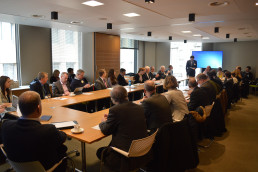
15th Ethical Finance Round Table Focuses on Millennial Perspectives in Finance
The latest Edinburgh Ethical Finance Round Table took place for a second time in the offices of Baillie Gifford. The topic for the meeting was the attitude of the millennial generation to finance and their potential influence on investment decisions. In a departure from the established format the meeting featured presentations from four speakers

The first presentation was given by Iona Bain, a freelance financial journalist who has established a leading media profile in this area, not least as founder of “Young Money Blog”. Her own view was that “millennial” was something of misnomer and in danger of becoming little more than a marketing concept, but nevertheless had become the established term for those in the 20-35 age group. While she questioned whether this generation is truly more entrepreneurial that its predecessors, there was no doubt that technology had changed attitudes and this age group very much wished to handle its finances by smartphone. So far this was largely confined to bank account operation as “fintech” was still not a widely understood term - this was likely to change however. She did consider that her generation was driven more by its ideals and social goals than purely questions of income and the fact that the general expectation was now to change job every three to four years meant that traditional pension structures etc were not well aligned. One particular concern to her was the apparent investment gap between men and women even in this age group, which in her opinion risked a “gender prosperity gap” developing.

The second speaker was Laura Westring who, following a career with the EU, was now Head of Communications at “FutureX”, founded last year to support young entrepreneurs and early stage businesses in Scotland. Her main reason for returning to Scotland had been the substantial growth in business start-ups, particularly in the area of fintech – Edinburgh now hosts the largest technology start-up hub in the UK. One important change in attitude which she had detected was that start-up business owners and their funders were less interested in the old model of building up the business with a view to an early exit than in maintaining control and involvement through alternative financing routes such as crowdfunding. Another significant development was the growth in promoting staff retention and commitment by providing opportunities for investing in the businesses concerned. In some cases, if entrepreneurs can show a convincing early track record they can hand pick their investors for their attitude and commitment to the business in question. One important aim of FutureX is to bring together entrepreneurs who might otherwise consider themselves competitors with a view to learning from each other and sharing ideas from which they can all benefit.
In response to a question from the floor as to whether she thought millennials are more “ethical” than previous generations, Laura responded that while that might be debatable she did think they were more open to risk-taking, due to the decline in job security and long term employment.

The next speaker was Dave Gorman, the Director of Social Responsibility and Sustainability at the University of Edinburgh. He set out the background to the University’s “Responsible Investment Policy”, which had been in place since 2013, with the practical consequence that investment decisions were now driven as much by “ethical” questions such as supply chains as by purely financial considerations. An annual survey was conducted with the student body, which generally produced around 4,000 replies. One general change of mindset he noted was moving on from identifying problems to focusing on solutions. Ideas about the purpose of investment had also widened and could be tied in with the University’s own work – e.g. social enterprise investment being linked with teaching and research projects.
Graham Burnside in the Chair introduced the final part of the meeting by summarising briefly the current inter-faith finance project taking place between the UKIFC and the Church of Scotland, seeking to agree a framework of shared values in the area of finance and economics and to move on from that to develop a practical financial product reflecting these values.

This then led into a final presentation from Martin Palmer, the Secretary General of The Alliance of Religions and Conservation (ARC), which works with all of the major faiths. Martin emphasised that the ARC’s work was not about inter-faith dialogue as such, but rather bringing the diverse faith groups together to work on non-religious issues, particularly on investment and environmental matters. Over 75% of faith groups now have negative screening processes in place but until very recently almost none had any positive investment policies. ARC was now working to create a “Faith Consistent Investment Alliance” to encourage and develop moves in this direction. Another important recent development is that the ARC and its associated faith groups are working with the UN on promoting its Sustainable Development Goals.