
Shari'ah Governance – what can the UK add to the debate?
Shari'ah authenticity is fast becoming a hot topic as the fall-out from the Dana Gas case, to be heard later this year (2017), continues to emerge. The issuer company is refusing to repay holders of its sukuk having received legal advice indicating that the bond, which they themselves issued, is no longer Shariah-compliant in the UAE therefore rendering it unlawful. Creditors counter that regardless of any recent changes in Islamic finance interpretations the sukuk was compliant at the time it was issued and should therefore be honoured. Maintaining the integrity of Shariah compliance is the core function of Shariah governance and the outcome of this case could considerably impact confidence in the authenticity of both the sukuk market and the Islamic finance industry as a whole.
With consumer and regulatory demands increasingly focusing on trust, transparency and accountability, corporate governance has become a critical challenge for all financial institutions. In particular, this trend has shone a light on Islamic financial institutions, where in-house boards of Islamic scholars self-regulate the institution’s Shariah compliance, raising questions around whether the current model of governance is fit for purpose. This theme was debated in London last October at the Islamic Finance Council UK (UKIFC) / International Shari’ah Research Academy for Islamic Finance (ISRA) Thematic Workshop which brought together local and international experts from Malaysia, GCC, Pakistan and elsewhere to explore issues relating to Shariah governance, regulation and business ethics.
The Bank of England (BoE) shared its current views on Islamic finance and the challenges in regulating the Shariah governance process as a secular regulator. With no UK legal requirement for Islamic financial institutions to have their own Shariah board the BoE’s policy approach is to seek to create a level playing field for Islamic finance vis-à-vis conventional finance. The focus of the Financial Conduct Authority is therefore on product disclosures (i.e. ensuring that statements relating to Shariah compliance are accurate), leaving it to the consumer to determine if they are comfortable with the interpretation of Shariah presented.
At the Workshop the UKIFC and ISRA launched a pioneering report exploring the potential role for External Shariah Audit in providing an additional independent check on the work of Shariah scholars.
The report seeks to strengthen Shariah assurance by calling for external Shariah audit to be made mandatory in Islamic financial institutions across the globe. The report was compiled on the basis of 30 in-depth interviews, including input from Central Banks in Bahrain, Malaysia, Oman and Pakistan along with AAOIFI and IFSB and financial institutions and audit firms.
The report’s findings indicated that while stakeholder feedback was broadly in favour of moving to a mandatory requirement for external audit, significant challenges remained in relation to the availability and experience of potential auditors and in defining their scope of work. The question of the public disclosure of external audit reports also remains a thorny issue.
An audience poll conducted at the event yielded the following results:
- 56% thought that the current model of Shariah Governance is NOT sufficient
- 76% felt that external Shariah audit WILL strengthen Shariah Governance
- The main barriers to the growth of Islamic finance in the UK were considered to be lack of knowledge and inadequate financial resources.
The integrity of Shariah will remain at the core of Islamic finance as without this it will lose its fundamental differentiator. Thus, ensuring robust Shariah governance frameworks are established that evolve with the growth of the industry and assist all stakeholders – including scholars – remains paramount. This will require a combined and co-ordinated global effort and the City, as a leading global financial centre, remains committed to playing its part in continuously improving governance frameworks. Pioneering initiatives led by the UKIFC, such as the world’s first CPD programme for Shariah scholars on conventional finance (since adopted by regulators around the world) and the seminal work on external Shariah audit mentioned above, have emanated from London, reflecting not only its ability to add value and provide thought leadership but also its commitment to work together with global partners in developing the Islamic finance industry.

Graham Burnside
Advisory Board Member
Islamic Finance Council UK (UKIFC)


UKIFC Board Members speak at the International Takaful Summit in London
Our Advisory Board Members, Ajmal Bhatty and Omar Shaikh were invited to speak at the International Takaful Summit in London on 11th-12th July 2017.
Ajmal Bhatty is a thought-leader in takaful and has been a practitioner and promoter for over 30 years. Ajmal is a Director at Tokio Marine Middle East, and is setting up a foundation to serve the takaful industry in steering it towards growth and stability and in developing ethical and sustainable micro-financial solutions for the markets of Africa and South Asia. Ajmal shared key insights into his work.
Omar spoke on Shari'ah Governance and Audit. Omar shared key findings from our External Shari'ah Audit Report (download a copy here) and fascinating insights from countries that had implemented Shari'ah Audits through their Central Banks. Omar said that the evolution of Shari'ah Governance was imperative as the [Islamic finance] industry evolved and used Morocco as a case study to demonstrate how emerging markets are supervising Shari'ah matters.
The 11th International Takaful Summit was a platform to discuss how the global Islamic insurance sector can capitalise on the experience of London’s insurance market in order to drive growth.
The flagship two-day programme addressed the challenges specific to takaful companies such as low penetration rates, distribution channels, suitable investment vehicles and the lack of qualified practitioners and operational issues that are affecting global business such as cyber security, digital disruption, data analytics and the use of robotics. The programme also covered challenges and opportunities specific to Africa, Asia and GCC takaful markets with a suggested road map for the way forward.

"Faith in finance" is the theme for the lastest Edinburgh Ethical Finance Round Table
The 13th Edinburgh Ethical Finance Round Table took place in the offices of Maclay Murray & Spens LLP at Quartermile on 15th June 2017. The topic for the meeting was faith-based finance and the faith perspective on ethical investment.
The first presentation was given by Catherine Alexander, chair of the trustees of the Church of Scotland Investors Trust. The Trust was established by the Church in the 1980’s to provide it and its congregations with cost effective investment management of their funds. The total funds under management currently amount to around £400m and day to day management is delegated to three investment management firms. Catherine indicated that the Trust has always operated on the basis of avoiding certain categories of investment, their current policy being to exclude any company with a higher than 15% involvement in armaments, alcohol, gambling, tobacco or tar sands. Certain of these exclusions were not without their questions – for example the Church of Scotland itself is willing to accept heritage lottery funding for projects. Increasingly the Trust is seeking ways of encouraging ethical behaviour by those they invest in and consider that they have an important role as lobbyists in this direction within the corporate sector.

Saquib Ismail, Senior Sales Manager with Al Rayan Bank gave the second presentation. He opened by giving a brief history of the Bank, which was founded in 2004 (as Islamic Bank of Britain) and opened its first branch in Scotland last year (see Scotsman article). It currently has around 50,000 customers and has grown rapidly in recent years. In keeping with Sharia requirements all of its products are asset-based and all returns provided to depositors constitute profit and not interest, although for the most part this distinction is invisible to the Bank’s customers. Interestingly, the list of assets and activities which the Bank excluded is very similar to that mentioned by Catherine, although in the Bank’s case the exclusions are absolute rather than matters of choice and policy. A recent notable development is that around 80% of the Bank’s deposit customers are now non-Muslims, although Muslims naturally remain a substantial majority of those taking “Islamic mortgages”.
The presenters then took a number of questions from the floor, one point which emerged being that any set of ethical investments principles needs to be kept under regular review, to take account of changing perceptions and understanding. There was general agreement that most recent research had tended to indicate that returns from ethical investments generally fully matched those of conventional investment strategies. David Cousland, of Fair Finance Agency, cited the work of Oikocredit in the developing world, including one notable project which had been running across the Muslim and Christian communities in Egypt for around 40 years.

The final part of the meeting saw a report on a “global first” for Scotland, namely the ongoing project between the Church of Scotland and the Islamic Finance Council UK to attempt to produce a financial product which would help to tackle financial exclusion, based on the shared values of the two faith communities (see BBC article). Doctor Richard Frazer and Martin Johnstone, Convener and Secretary of the Church and Society Council, spoke for the Church of Scotland and Omar Shaikh for the UKIFC. The aim will be to produce in the fairly near future a document setting out the conclusions reached on the applicable shared values, as emerging from the series of inter-faith workshops which had taken place, and there would then be a phase of “R & D” seeking to build out the detail of a financial product. It was emphasised that the ultimate product would be open to the whole of society, not only those of the faiths involved. The relevance of Scotland’s long history of ethical finance was noted and Doctor Frazer also made the point that part of the process would involve taking views from the “grass roots” communities which the product would be intended to assist. In response to a question from the floor Mr Shaikh confirmed that it was the intention of involving other faith groups also in the process as matters moved forward.


UKIFC Partner with ME Global Advisors for GEFF2017
The UKIFC is delighted to be working with Middle East Global Advisors as Strategic Partner for Global Ethical Finance Forum (GEFF) 2017. The theme for GEFF 2017, also being supported by Scottish Government, is “Ethical Finance: Merging Profit & Purpose” and it will take place on September 13 & 14 at the RBS Conference Centre in Edinburgh.
Omar Shaikh, Advisory Board Member said, “Following overwhelmingly positive feedback from GEFF 2015, we are delighted to bring the forum back to Edinburgh. We are committed to creating socially responsible and fairer economies and hosting GEFF 2017 will further Scotland’s reputation as a worldwide industry leader in ethical finance.”
At its inaugural edition in 2015 (also hosted in Edinburgh), GEFF witnessed notable names like His Royal Highness Emir Muhammad Sanusi II, Emir of Kano; Keith Brown MSP, Cabinet Secretary for Infrastructure, Investment & Cities, Scottish Government; Lord Mohamed Sheikh, Baron Sheikh of Cornhill; Dr. Zeti Akhtar Aziz, Former Governor, Bank Negara Malaysia & Ted Roosevelt Malloch, Former Professor and Senior Fellow in Management Practice, University of Oxford, amongst others.
GEFF 2017 endeavors to play a critical role in enabling stakeholders from the traditional responsible and Islamic finance sectors to forge and nurture new relationships aimed at building cooperation across various sectors and geographies.
For more information, visit our event page or email chris@ukifc.com
Press Releases
Scotland to host historic dialogue between global leaders in ethical finance
Merging Profit & Purpose key focus at Global Ethical Finance Forum

Financial Inclusion Expert Joins UKIFC Team
The UKIFC is delighted to announce the appointment of Ms Modupe Ladipo as a Senior Advisor. Ms Ladipo specializes in financial inclusion and has over 25 years’ experience in financial services working across complex environments in Africa, Asia-Pacific, Europe and the US.
Based in Nigeria, Ms Ladipo will strengthen the UKIFC's Government Advisory capability, particularly in Africa where financial inclusion is a key policy driver.
A pioneer of non-interest (Islamic) finance in Nigeria Ms Ladipo is the former CEO and current Chair of Enhancing Financial Innovation & Access (EFInA); a leading NGO backed by UK Government's DFID and the Bill & Melinda Gates Foundation.
UKIFC Advisory Board Member Mr Omar Shaikh said: "We worked closely with Modupe and her team during our time in Nigeria and were impressed by her passion, professionalism and the technical expertise she demonstrated in making the Nigerian financial system work better, especially for the poor. As a recognised leader in financial inclusion across Africa and with strong knowledge of both conventional and Islamic finance, we look forward to working with Modupe to expand our work in emerging markets and using non-interest/Islamic finance to address financial inclusion."
Commenting on her appointment Ms Ladipo said: "I joined the UKIFC as a Senior Advisor to provide thought leadership on how Islamic and Ethical Finance can contribute to the global financial inclusion agenda. I look forward to provide technical support for the development of innovative Islamic and Ethical Finance products aimed at low income earners across multiple jurisdictions."
To find out more about the UKIFC's work in Government Advisory and Ethical Finance please click here.
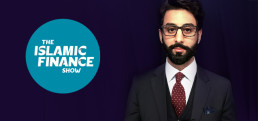
UKIFC Advisory Board member appears on The Islamic Finance Show
UKIFC Advisory Board member Omar Shaikh appeared on The Islamic Finance Show, Islam Channel (Sky 806) alongside Dr Samir Alamad, Head of Shari’ah Compliance and Product Development at Al Rayan Bank.
The Islamic Finance Show, presented by Sohail Nawaz, is on a journey to unravel a financial system dating back over 1000 years. The series has been examining what Islamic finance is, the importance of ribs, and what Shari’ah compliance means. In the 4th instalment of the series, Omar Shaikh and Dr Samir Alamad discuss what Islamic banking is.
To watch episode 4 of The Islamic Finance Show, click on the image below:


Graham Burnside attends Responsible Finance and Investment Summit in Zurich
Our Advisory Board Member, Graham Burnside was invited to speak at the RFI Summit in Zurich on 3rd & 4th May 2017, on financial inclusion and accessibility, and efficiency through FinTech. During the session, Graham also discussed whether by opening finance to Muslims, impact investing can have a broader social impact.
Graham is an expert in banking and finance law, specialising in particular in structured finance and capital markets. He is considered the Scotland's leading expert, having structured and documented the first (and so far only) Islamic mortgage products operating under Scots law and the first fully Sharia-compliant commercial real estate financing in Scotland.
The Responsible Finance & Investment Summit (RFI Summit) is an initiative of the RFI Foundation and Swiss Arab Network to build awareness of shared values that can bring socially responsible investing (SRI), environmental, social and governance (ESG) and Islamic finance together to increase their positive impact.
During the Responsible Finance & Investment Summit key stakeholders within responsible finance were brought together to build connections for new growth opportunities and more measurable impact. The RFI Summit played a vital role in connecting representatives from across the responsible finance industry to build on the growing cooperation between SRI, ESG and Islamic finance.

UKIFC Features in IIBI's New Horizon Magazine
The UKIFC features twice in the most recent edition of The Institute of Islamic Banking and Insurance's (IIBI) New Horizon magazine as issued on 4th May 2017.
Please click on the images below to download the articles:


For more information on the IIBI please click HERE.

Need funding for a startup in the UK? Don't bother with banks
As published by Alicia Buller in MySalaam.com 29 March 2017
The British Muslim startup landscape is booming. Each passing month sees the launch of new and enterprising businesses, from fine dining to prayer apps to celeb lipsticks. Despite the success of some individual businesses, many entrepreneurs say that gaining access to startup funding remains their biggest challenge.
The UK government has recognised the value of the Islamic economy by setting up directives to promote the industry, but the options for Muslim entrepreneurs at the seed-funding stage remain limited.
“The UK government’s initial policy objective for Islamic finance was to promote financial inclusion,” said Omar Shaikh, Executive Board Member at the UK Islamic Finance Council (UKIFC), “but there remain various gaps in government- and local council–backed financial initiatives which are not sensitive to, or do not understand, the need to provide a Shariah-compliant alternative. For example, we still don’t have Islamic student loans.”
He added that early-stage startup venture capital is not generally the remit of high-street banks, and therefore, “big society vehicles” are the bodies that should be tasked with supporting entrepreneurship.

Photo: Omar Shaikh, Executive Board Member at the UK Islamic Finance Council (UKIFC)
“But if you look at the support provided to start-ups via institutional frameworks, be it government funding or city councils, they typically have some interest-bearing financing option like soft loans or preference shares,” he continued. “That makes it more difficult to access for Muslims, because there is a considerable aversion towards engaging with interest-based products.”
“In the UK, I’ve come across very few initiatives, but they’re more specific. We’ve seen real estate and other very specific types of funds established, but they are not your traditional VC-type player that goes out to the open market. One or two attempts have been made in the past, but they’ve been very localised.”
According to Shaikh, In the face of limited financing options, entrepreneurs are refinancing their own houses with Home Purchase Plans to get their businesses off the ground. “Select people are refinancing their existing property. That’s the only institutional capital that the Muslim community can get their hands on. They are taking equity out from their property by refinancing it in an Islamic way”.
LOOKING AT CROWDFUNDING OPTIONS AND VC PLAYERS
He also suggests looking at crowdfunding options and approaching all the mainstream VC players who are in the market. “Never give up,” he advises. “You can take equity-based financing, and that complies with Shariah.”
Hassan Waqar is a part-time university student and the founder of Ummah Finance, the UK’s first fintech financial services provider. His is a familiar story for entrepreneurs who want to get into Shariah-compliant businesses. “I’m a Muslim, and I’m launching my own business that mainly targets Muslims across the UK, but I am finding it difficult to gain the funds for my venture as investors are not up to speed on the strength of the industry.”
Waqar added, “It’s up to us as Muslim entrepreneurs to jump these hurdles and make the Islamic economy grow. If we want to succeed, then we need to start putting in the hard work, and results will pour in.”
LACK OF KNOWLEDGE AND AWARENESS OF THE HALAL MARKET IN GENERAL CAN BE A HURDLE FOR STARTUPS
Imran Kausar, founder of London-based halal-food brand Haloodies, agrees that lack of knowledge and awareness of the halal market in general can be a hurdle for Muslim startups: “Muslims are only 5 per cent of the UK population, so [they] can be too niche for some investors seeking rapid scale.”
His advice is for UK companies to work around these challenges together, seeking investors from Muslim countries and tapping capital sources that can understand Shariah rules and appropriately value the Muslim markets.
“Utilising platforms that can enable increased sharing of knowledge, experience and capital would also help; for example, angel investor events, entrepreneur forums and Muslim-focused crowdfunding sites can all play a role.”

UKIFC and CMS join forces to drive growth in Islamic finance industry
The Islamic Finance Council UK (‘UKIFC’) and international law firm CMS today announce an innovative partnership to help develop, support and optimise Islamic finance frameworks across the world. The aim is to offer a single, cohesive legal, advisory and capacity building service tailored to help government agencies, regulatory bodies and financial institutions to respond creatively and develop capacity for Islamic finance.
The partnership launches at a time when global Islamic finance assets are expected to rise from $2 trillion in 2015 to $3.5 trillion by 2021 - representing a 12% compound annual growth rate. Islamic banks are likely to be the main driver of this growth, with assets expected to reach $2.7 trillion by 20211.
“With a growing Muslim population, the potential future demand for Islamic finance is huge,” says Shakeel Adli, Head of Islamic Finance at CMS. “By bringing together a unique blend of practitioners who are recognised leaders in the global Islamic finance market, we are able to draw on our collective knowledge and expertise to provide a one-stop shop offering a truly unique and holistic approach to Islamic finance.”
UKIFC and CMS have recognised that the availability and effectiveness of Islamic finance in any given jurisdiction depends on meeting a number of challenges; the two most significant of which are creating robust regulatory frameworks and developing human talent. To effectively engage in Islamic finance, investors, consumers and financial institutions require regulatory clarity. It is also of critical importance that human talent is developed to address the unique challenges which Islamic finance presents.
The UKIFC and CMS partnership will assist jurisdictions to meet these challenges.
“As leaders in our respective fields, we share a commitment to growing the Islamic finance industry,” says Omar Shaikh, Advisory Board Member at UKIFC. “By combining our capabilities, we have created a uniquely comprehensive, best in class Government advisory providing support and guidance for government agencies, regulatory bodies and financial institutions as they look to build their capacity and create enabling legal and regulatory frameworks for Islamic finance.”
The UKIFC was established in 2005 as a specialist advisory and developmental body focused on promoting and enhancing the global Islamic and ethical finance industry. Having contributed substantively to the development of the UK Government’s Islamic finance framework, the UKIFC has been appointed to advise several regulators and government ministries across Africa, Asia and Europe and has developed a proprietary methodology for government policy advisory within a secular context.
CMS meanwhile has extensive experience of successfully delivering Islamic finance regulatory advisory projects in multiple jurisdictions including Kazakhstan and Oman amongst others. Significantly, CMS has a geographic footprint which includes 65 offices spread across 38 jurisdictions. The firm has deep local roots with access to cross-border expertise and strong connections to Governments and associated agency bodies in each of the conventional, Islamic and ethical finance sectors.
“The new partnership between UKIFC and CMS offers a team of passionate and committed Islamic finance experts that genuinely combines legal, finance and capacity building ability that is unlike any other advisory firm,” Omar Shaikh concludes.
1Thomson Reuters State of the Global Islamic Economy 2016/17